How Comb Tooth Spacing Separates Coat Layers
Grooming comb tooth spacing controls which coat layer a pass reaches — wider gaps clear topcoat, narrower gaps engage...
Read it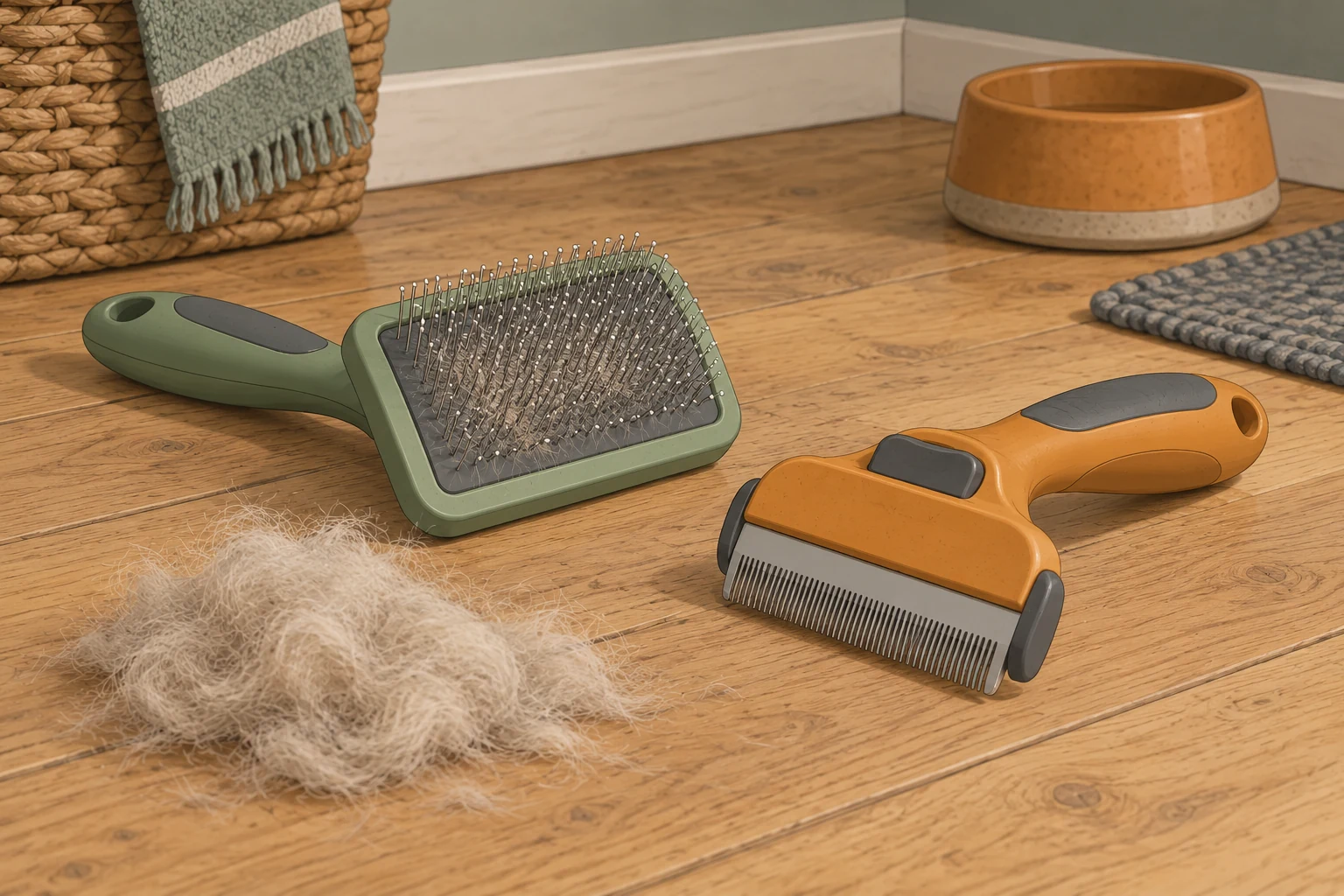
All Grooming Tools articles from Pet Care Made Clear.
Grooming comb tooth spacing controls which coat layer a pass reaches — wider gaps clear topcoat, narrower gaps engage...
Read itA slicker brush's pad spine is a structural rib that governs how far each wire pin bends under grooming load, shaping...
Read itA pin brush cushion pad regulates how far individual pins deflect under load, distributing pressure across the coat r...
Read itA slicker brush pin's tip radius determines how far the pin reaches into coat layers and how much force it exerts on ...
Read itA grooming glove's rubber nubs work by mechanical friction and flex to dislodge shed hair from the undercoat without ...
Read itA grooming rake's rotating teeth spin independently on their axis, converting drag friction into rolling contact and ...
Read itA dematting comb uses curved, serrated blades to slice through tangled fur rather than pulling it apart, reducing the...
Read itThe mechanics of a slicker brush's fine bent-wire pins, and how their angle removes loose hair and light tangles.
Read articleThe simple mechanics behind clipper guard combs — how tooth height and blade position determine hair length.
Read articleThe mechanics behind a deshedding tool's curved blade, and how its tooth spacing targets undercoat without cutting skin.
Read article