How a Treat Pouch Belt Clip Bears Draw Force
A treat pouch belt clip uses spring tension, jaw geometry, and polymer fatigue resistance to survive hundreds of rapi...
Read it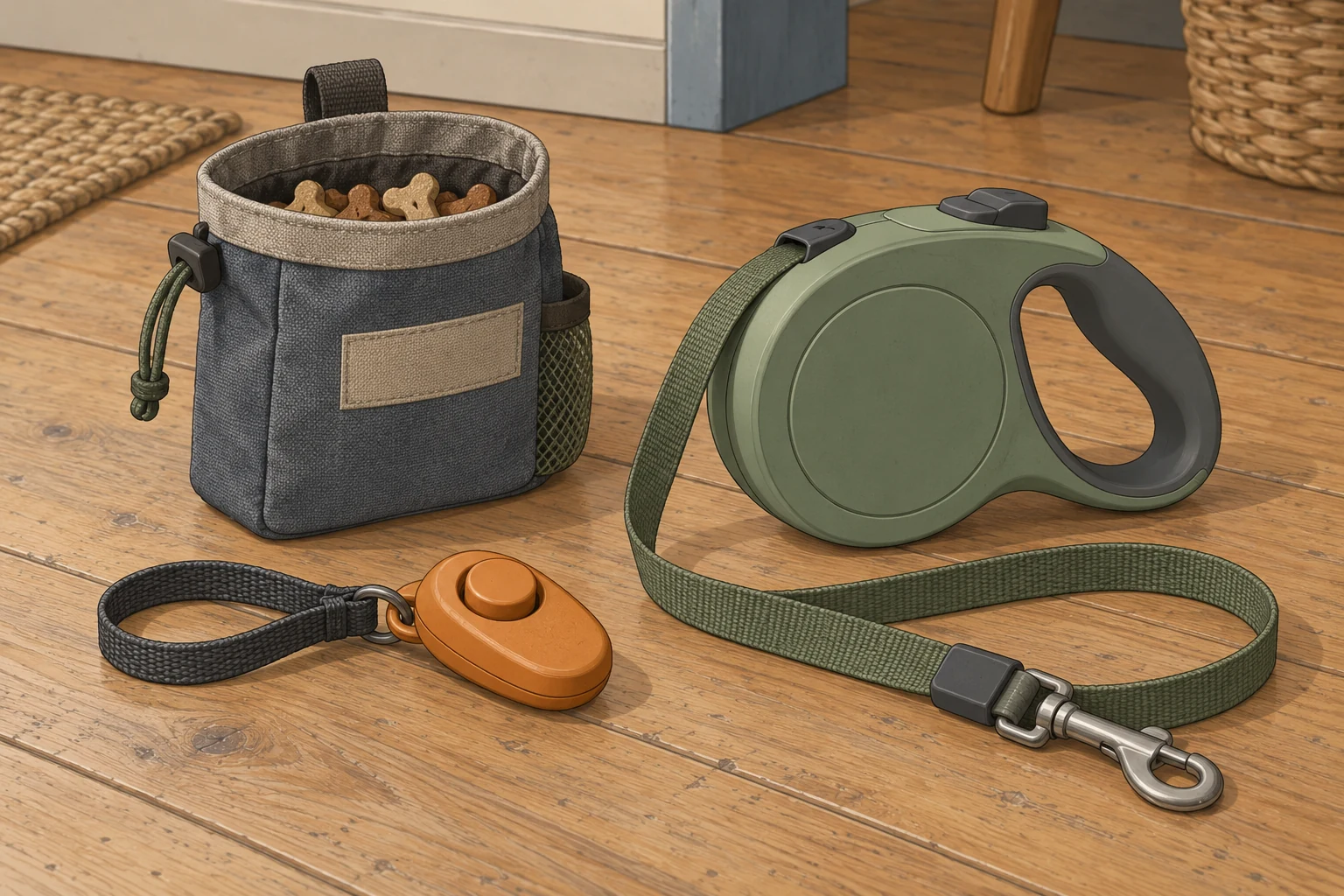
All Training & Behavior Tools articles from Pet Care Made Clear.
A treat pouch belt clip uses spring tension, jaw geometry, and polymer fatigue resistance to survive hundreds of rapi...
Read itTarget stick tip material — rubber, plastic, or metal — determines how clearly a touch cue registers against an anima...
Read itA shock-absorbing leash spring stores and releases kinetic energy through elastic deformation, reducing peak force tr...
Read itA break-away collar buckle uses a spring-loaded or pressure-sensitive latch that disengages at a calibrated force thr...
Read itA no-pull harness girth strap disperses shoulder-forward force across the ribcage and sternum, mechanically reducing ...
Read itA target stick works by moving the precise contact point between animal and cue away from the handler's hand, changin...
Read itA leash bungee uses elastic polymer geometry to convert abrupt tension spikes into gradual, distributed force — here ...
Read itA treat pouch's magnetic closure controls how fast a trainer can access and deliver food rewards, directly shaping th...
Read itA martingale collar uses a secondary loop and sliding rings to apply limited, self-stopping tension — different from ...
Read itA head halter controls a dog's forward momentum by shifting the point of leash attachment to the nose, not the neck —...
Read itThe physics behind a front-clip harness, and how attachment point placement changes the leverage of a pulling animal.
Read articleThe mechanics behind a retractable leash's spring-loaded reel and its locking button, and where the system has limits.
Read articleThe behavioral mechanics behind clicker training, and how a consistent sound becomes a conditioned marker.
Read article